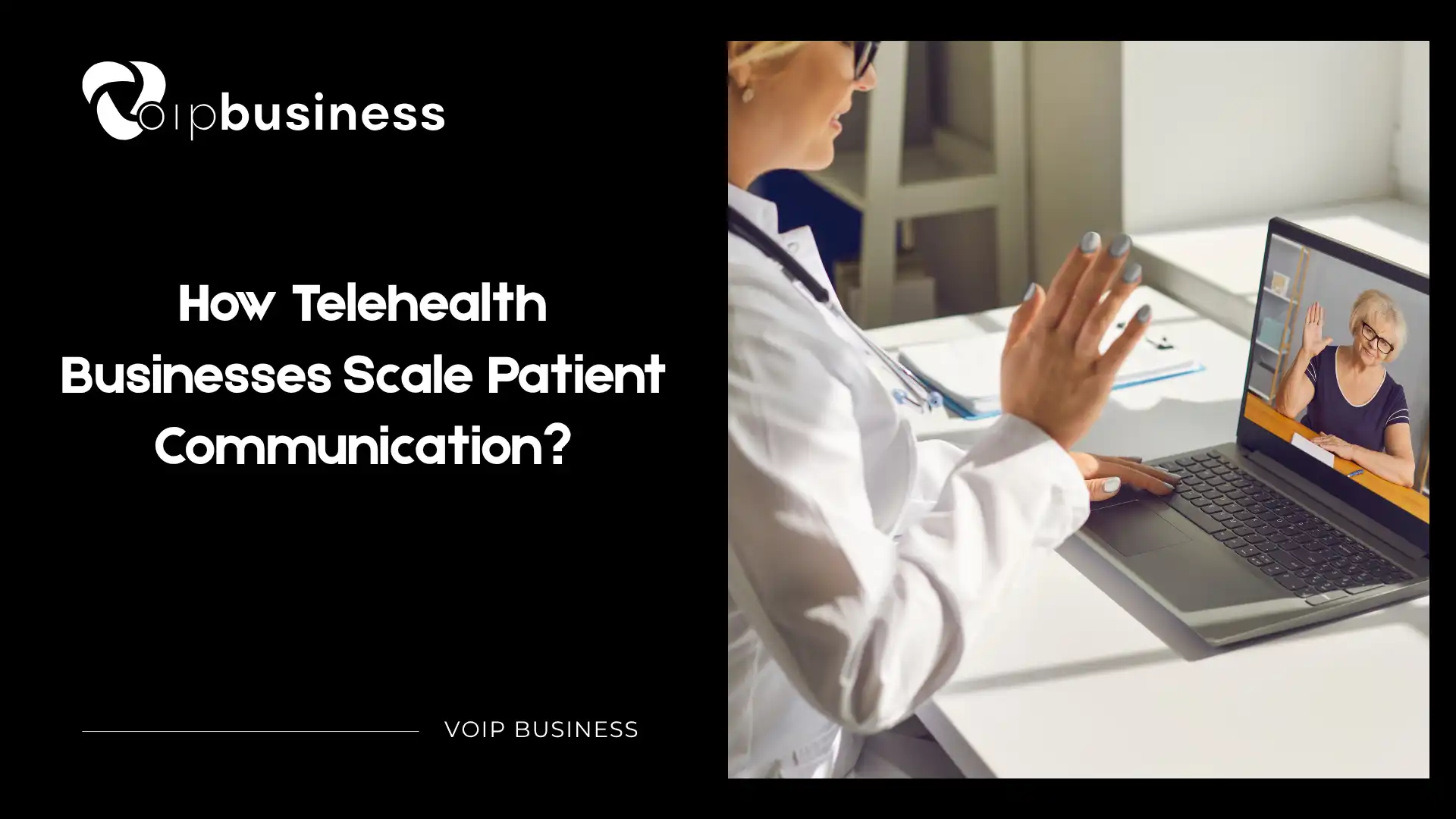
Telehealth has moved fast over the past few years. What used to be a backup option for people who couldn’t make it into a clinic is now, for a lot of patients, just how healthcare works like routine check-ins, prescription refills, even specialist visits happen over a screen. That shift means digital communication now carries as much weight as the clinical care itself.
But growth has a cost. More patients means more appointment requests, more prescription questions and more billing emails. Providers who kept things running smoothly at 200 patients often start dropping the ball at 2,000 — not because the care got worse, but because the systems behind it didn’t scale.
That’s the real reason patient communication tools have moved from optional to essential. They let a practice keep messaging patients securely, automate the repetitive stuff, and smooth out a process that otherwise gets clunkier every time the patient list grows.
None of this is about replacing clinicians. It’s about clearing the junk off their plate, the reminders, the intake paperwork, the routine “your appointment is confirmed” messages, so the humans on staff can spend their time on things that actually need a human.
Why Communication Has Become the Product?
Healthcare has always run on communication, but in a physical clinic, a lot of it happens without anyone thinking about it. You catch the receptionist’s eye, a nurse walks by and answers a quick question, you leave with a paper handout. Telehealth strips that away.
Weak communication tracks pretty closely with missed appointments and patients who quietly stop showing up. Practices that respond quickly and explain things clearly tend to hold onto patients longer — and that’s not a coincidence.
The tricky part is that responsiveness gets harder to maintain as a business grows, not easier. Throwing more administrative staff at the problem helps for a while, but payroll isn’t infinite, and more people doesn’t automatically mean better organized. That’s usually where a proper communication platform earns its keep. It lets a practice grow without the personal touch quietly disappearing.
What Breaks First When You Grow?
Growth is good, obviously. It’s also the thing that exposes every crack in a process that used to just barely work.
Most telehealth practices start out running on phone calls, email, and a shared calendar someone updates by hand. That’s fine for a small operation. It falls apart fast once volume goes up. A few things tend to break first:
- Message volume outpaces the staff answering them
- Response times creep up during busy stretches
- Double-booked or conflicting appointments
- Patients forgetting appointments no one reminded them about
- Follow-ups that slip through the cracks
- Staff spending hours a day on things that should take minutes
- Patient records scattered across three or four different tools that don’t talk to each other
Hiring Alone Won’t Fix It
There’s a common assumption that scaling patient communication just means hiring more people. It’s an understandable instinct and it’s incomplete.
Picture a clinic that doubles its administrative staff but is still sending reminders by hand, still using paper intake forms, still juggling three disconnected messaging tools. Payroll goes up. The bottlenecks stay exactly where they were, just with more people standing around them.
The practices that actually scale well take a different route. Instead of adding headcount to absorb repetitive work, they automate the repetitive work and let staff spend their time where judgment and empathy actually matter the conversations that shouldn’t be automated in the first place.
Finding the right balance between automation and human interaction has become an important consideration for mental health treatment platforms, like MEDvidi.
Remote Patient Communication Tools: The Foundation of Sustainable Growth
Once patient numbers start climbing, communication stops being a matter of “answer the phone, reply to the email.” Every booking, confirmation, follow-up instruction and billing question has to happen fast, has to stay secure, and has to be consistent no matter who’s handling it.
The moment a practice is running three or four disconnected systems to manage all that, things start slipping. Work gets duplicated, responses get delayed, and both staff and patients end up frustrated with something that should be simple.
That’s the problem remote patient communication tools are built to solve.
Features That Actually Move the Needle
Not all communication platforms are built the same, and providers don’t need every bell and whistle; they need the handful of features that genuinely reduce friction without adding a new layer of complexity for patients to navigate.
| Feature | What It Does for Patients | What It Does for Providers |
| Secure Messaging | Skip the hold music entirely | Fewer inbound calls to manage |
| Video Consultations | Get care without leaving home | More appointment slots, same staff |
| Online Scheduling | Book at 11 p.m. if that’s when you’re free | Less time on the phone booking |
| Automated Reminders | Fewer “wait, was my appointment today?” moments | Fewer no-shows eating into the schedule |
| Digital Intake Forms | Registration takes minutes, not a clipboard | Nobody’s retyping handwriting |
| Patient Portal | One place to check records and updates | One place staff points patients to |
| Follow-up Notifications | Care doesn’t just stop after the visit | Patients stay engaged and come back |
None of these features is a silver bullet on its own. Stack them together, though, and you get a system that doesn’t buckle as the patient list grows which is exactly the point.
Secure Messaging Handles the Stuff That Doesn’t Need a Phone Call
A lot of what patients want to ask isn’t urgent. It’s “can I get this prescription refilled,” or “what was I supposed to do after the visit again,” or “can we move Thursday’s appointment.” None of that needs a live phone conversation. It just needs a fast, accurate answer.
Secure messaging gives patients a way to ask those questions and get real responses without sitting on hold for twenty minutes to ask something that takes ten seconds to answer.
On the provider side, this takes a real bite out of call volume, and it leaves behind something a phone call doesn’t: a written trail.
And because these messages run through systems built for healthcare, the encryption is handled properly, so sensitive information doesn’t end up sitting somewhere it shouldn’t.
Automation Should Free Up People, Not Replace Them
There’s a real worry among some clinicians that leaning on automation means losing the human side of care. It’s a fair concern to raise and in practice, it usually plays out the opposite way.
Automation earns its keep by taking over the repetitive administrative stuff, not the conversations that actually require a person. Software can handle things like:
- Confirming appointments
- Sending reminders
- Delivering digital intake forms
- Routing messages to the right department
- Sharing post-visit instructions
- Following up for patient feedback
A Workflow That Doesn’t Fall Apart When You Grow
Tools alone don’t fix communication problems. Without a clear workflow behind them, even the best software just becomes another disconnected piece.
A workflow that actually scales tends to follow a pattern like this:
- Patient requests an appointment online
- Confirmation goes out automatically
- Digital intake and registration forms are completed
- Reminders go out ahead of the visit
- The visit happens
- Secure follow-up communication goes out
- Educational materials and care instructions follow
- A short satisfaction survey
- Future appointment reminders, when relevant
Each step should hand off to the next without someone having to manually push it along. Once that’s standardized, a practice can take on more patients without its administrative workload growing at the same rate which is really the whole goal.
Why Everything Needs to Talk to Everything Else?
One of the most common mistakes growing practices make is buying a pile of good tools that don’t integrate with each other.
Scheduling lives in one system. Messaging lives in another. Patient records sit somewhere else entirely. A billing question means a staff member logging into three different platforms before they can even answer it.
Integrating with the EHR closes that gap. When the communication platform and patient records actually talk to each other, nobody’s re-entering the same data twice, and staff can trust that what they’re looking at is current.
Where AI Actually Fits In?
AI is quietly working its way into everyday healthcare operations, not as a replacement for clinicians, but as a way to lighten the administrative load sitting on top of them. Right now, it’s mostly useful for things like:
- Sorting incoming patient messages by urgency
- Routing questions to the right department
- Drafting appointment summaries for a clinician to review
- Helping with documentation
- Organizing a patient’s communication history
- Matching scheduling to provider availability
Mistakes Growing Telehealth Providers Should Avoid
Growth has a way of exposing every weak spot in an organization, especially once the patient list gets longer.
i. Running on disconnected systems
Scheduling in one tool, messaging in another, records somewhere else, billing in a fourth — that’s not efficiency, it’s just complexity spread across more logins. Integrated systems cut down on both the wasted time and the errors that come from staff working off different information.
ii. Ignoring What Patients Are Actually Saying
Patients usually notice a communication breakdown before the internal team does — they’re the ones living it. Regular surveys and simple feedback requests catch problems while they’re still small.
Final Words
As telehealth keeps expanding, communication is what separates the providers who scale well from the ones who don’t. The real question is whether a practice can still deliver timely, secure, consistent communication once the patient list gets a lot longer.
Investing in remote patient communication tools pays off in fairly concrete ways like less administrative overhead, fewer missed appointments, and patient relationships that actually last.
Technology is going to keep changing. What it’s supposed to do won’t: make healthcare easier to reach, faster to respond, and built around the person receiving it.